
5 Alternatives to the Contraceptive Pill 
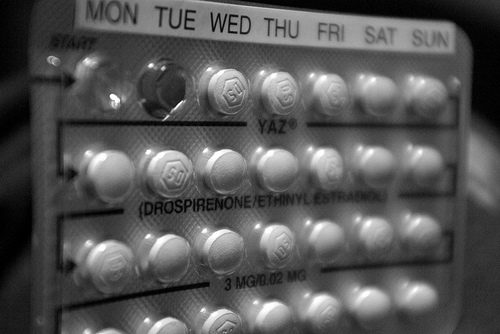
Recently I wrote an article for MindBodyGreen, a well-being website based in the USA. The article listed my very personal reasons for why I will never take another contraceptive pill again. It drew a phenomenal response being shared thousands of times via social media and resulting in hundreds of comments (some positive, some negative!).
Many women asked, what are the alternatives to taking the pill? So here are 5 alternatives to the contraceptive pill, which I will hope you find helpful.
1) Condoms
Pros:
- They prevent pregnancy when used correctly (98% effective)
- They can prevent sexually transmitted diseases when used correctly.
- They’re fairly inexpensive and easy to buy and use.
- If the woman has a latex sensitivity, polyurethane condoms are a great alternative.
- They don’t affect your menstrual cycle, mood or weight.
- They can help a guy last longer in bed.
- They collect the man’s semen, so sex is less messy.
Cons:
- They can be a bit unromantic when you have to interrupt foreplay to put one on.
- They can decrease sensitivity for both the man and the woman.
- Some women have a sensitivity to latex, which is the material that the majority of condoms are made of.
- Some condoms contain the spermicide Nonoxynol-9, which can cause irritation.
- The condom can fall or it can tear resulting in possible pregnancy.
2) The Withdrawal Method (or Pull-Out method)
Pros:
- In a committed, monogamous relationship, many couples consider the pull-out method.
- It’s product, hormone and medication-free, plus it can make sex feel more natural than with physical contraceptives.
- When used properly it has only a 5% failure rate.
Cons:
- Not good if your partner is clumsy, excitable or stubborn. He needs to pull out at just the right time!
- You can still get pregnant even if used correctly. This can be attributed to sperm from a recent ejaculation being carried to the egg via pre-ejaculation fluid or if semen lands onto or around the vulva and is then introduced into the vagina.
3) Natural Family Planning
Natural family planning is a method that teaches you at what time during the month you can have sex without contraception and with a reduced risk of pregnancy. It works by plotting the times of the month when you’re fertile and when you’re not. You learn how to record fertility signals, such as your body temperature and cervical secretions (fluids, or mucus), to identify when it’s safer to have sex. Natural family planning is more effective when more than one fertility signal is monitored.
Pros:
- It works in harmony with your natural cycle.
- There are no side-effects and no chemicals.
- Most women can use this method, provided they understand how it works, keep accurate records and have a regular cycle.
- It can be used to avoid pregnancy or to help you become pregnant.
- It can help you recognise normal and abnormal vaginal secretions, so you can be aware of possible infection.
- It involves your partner in the process, which can help increase feelings of closeness and trust.
Cons:
- Natural family planning does not protect against sexually transmitted infections (STIs).
- You will need to avoid sex, or use contraception such as condoms, during the fertile phases.
- It can be much less effective than other methods of contraception.
- It will not work without the continuing commitment and co-operation of both you and your partner.
- It can take several menstrual cycles before you become confident in identifying your fertile time.
- You will need to keep a daily record of your fertility signs.
- It is not suitable if you have irregular periods.
- Factors such as stress, illness, travel, lifestyle and use of hormonal treatments can disrupt your fertility signs.
4) Family Planning Computers
If the traditional natural family planning method seems like far too much hard work, then you might want to splash out a little bit and buy something like The Lady Comp.
Family planning computers are programmed to accurately determine and display the time of ovulation. Ovulation causes a slight, but noticeable rise in body temperature. When you measure your temperature with the sensor every morning before you get up, the fertility computer evaluates the data and quickly recognises your individual fertility pattern. If you are fertile the computer will display a red light and if you are in your infertile phase the computer will show you a green light. The display is 99.3% reliable and valid for the next 24 hours.
For more information visit The Lady Comp website here: https://www.lady-comp.co.uk
5) Diaphragm and caps
Diaphragms are dome-shaped devices. They are usually made from soft rubber or silicone. They are put into the vagina and form a barrier between sperm and the womb. There are various different types and sizes. Caps are smaller and firmer than diaphragms. They cover just the cervix.
Pros:
- They are easy use and do not have any serious medical risks.
- The advantage over a male condom is that you can put it into the vagina at any time before sex.
- They do not interfere with foreplay
- They are reusable
- They do not interfere with your cycle or fertility
Cons:
- You have to be specially fitted by a medical professional for a diaphragm or cap.
- Sometimes diaphragms and caps can slip or dislodge during intercourse. Also, they are sometimes difficult to remove.
- To ensure proper coverage, the device should be carefully examined before each use to be sure it is not punctured or torn. About 10 percent of women can’t use the cervical cap because they have an irregularly shaped cervix.
- Women using the diaphragm may develop frequent urinary tract infections.
- Some women and men experience allergic reactions to certain spermicides, rubber, or latex.
Thinking of coming off the pill and worried about how long it will take your hormones to re-balance? Speak to me about my Pill Detox Programme which provides support, relief and detoxing with homeopathic and herbal remedies when making the switch from pill-user to pill-free. More details can be found here.
Do you have any forms of contraception you prefer to use? Feel free to comment below and let us know!
Until next time, have a happy, healthy week! 
Claire Zarb LCPH
t: +44 (0)7582 269569
e: claire@clairezarb.com
w: www.clairezarb.com
s: c.zarb

LOVE IT! Thanks so much for sharing such an important message. My husband and I have used the Fertility Awareness Method for years and I’m a huge advocate (and teacher). Plus it’s 98% effective, what can be beat?
Hi Ellie, thanks for your comment. So glad you enjoyed the article!
Ms. Zarb, thank you very much for this article. I hold strongly that our healthy bodies should not be medicated, and that doing so may harm us.
I would like to respectfully disagree with the “cons” listed for the NFP methods.
But first off, I wish to clarify a point in regards to #2.
“You will need to avoid sex, or use contraception such as condoms, during the fertile phases.”
As with artificial contraceptive methods, in postponing or avoiding pregnancy, a method is only as good as the weakest link. When one has sex during one’s fertile period, even with contraception, one is defeating the NFP method completely. This makes the NFP method essentially not being used. But if one becomes pregnant, it will likely be “blamed”, when it is the contraception which is at fault.
It is my understanding that the effectiveness of birth control, condoms (for example), is arrived at by researching the number of women who because pregnant while using the method. This approach does not take into consideration whether the woman is fertile or infertile when sex is being engaged in. Considering that a woman is infertile 75% of the month (generally speaking) and cannot get pregnant during that time, the actual effectiveness rate of the contraception is not necessarily accurate. Therefore, it is not the effectiveness of the condom which is to be credited for the whole time as most of the time it is likely being used when a woman is infertile.
Therefore when a couple has sex during a woman’s fertile time frame while using a condom, they are taking on a very high risk, much higher then what is listed on the contraceptive packaging. If a couple chooses to have sex with contraception during the woman’s fertile period, this pretty much nullifies the use of NFP, rendering it useless, in avoiding pregnancy. I believe this is important to make clear.
In regards to point #3.
“It can be much less effective than other methods of contraception.”
When used correctly for postponing pregnancy, NFP has a 99% effectiveness rate. A study done by WHO amongst almost 20,000 couples in India over a 10 yr period of time has shown the unwanted pregnancy rate “approaching zero” (www.ncbi.nlm.nih.gov/pubmed/8401097). A similar study done by UNICEF in South America had similar results.
Research done here in the U.S. shows a lower rate of effectiveness in avoiding pregnancy, as they include pregnancies which were sought and does not differentiate whether or not the couple desired to become pregnant or avoid pregnancy. NFP is not contraception. It is Family Planning.
I feel it is important to also note that I have noticed many books on the topic which report the effectiveness rate of NFP base the numbers on the long outdated Rhythm Method, not the modern methods we have today (Sympto-mucuos) without clarification.
#5 “It can take several menstrual cycles before you become confident in identifying your fertile time.”
Almost all women have it down by the third menstrual period. The above cited study states “According to the World Health Organisation, 93% of women everywhere can identify the symptoms, which distinguish adequately between the fertile and infertile phases of the menstrual cycle.” This was published in 1993. Training has improved since then.
# 6 ….I STRONGLY disagree with this one. This is incorrect.
“It is not suitable if you have irregular periods.”
NFP is indeed suitable for women with irregular periods. Absolutely!
I have used Billings method of NFP for all my fertile life. My periods ranged from 17 days to 45 days, with them generally falling into 25 to 35 days. I never had trouble discerning my fertile times. I even corrected my ob/gyns on my due dates of two of my children as I knew the conception dates of my children and they were going by the ‘date of last period’. One was off by over a month! A later ultrasound showed that I was correct. Even with the altered due date, I was 2 days off and the doctor was 9 days off.
When I nursed, my periods came back as early as 4 months after birth, to 2 years after birth. And after they returned, they were anywhere from 1 to 6 months apart (nursing can do that). I was able to discern when I ovulated. After my first pregnancy, I thought I was off because I couldn’t believe my period would not come for that great length of time. But 6 months after birth, I was able to identify my ovulation, and exactly 14 days after, yup, welcome back! 😉
I am currently perimenopausal with my menses coming anywhere from 1 month to 10 months apart. I know when I’m ovulating.
It is important to note that NFP is *not* our grandmother’s outdated by 50 years “Rhythm Method”. Methods like Creighton and Billings are *very* suitable for women with irregular periods.
#8 “Factors such as stress, illness, travel, lifestyle…can disrupt your fertility signs.”
I believe this may be more in regards to methods that use the basil temperature to determine fertility. I am not familiar with the temperature methods. I have not heard of these things altering one’s ovulatory mucus signs, except for some illnesses I would assume. And in the case of illness, knowledge of how one’s body normally works is very helpful for your doctor in discerning what is going on. With this in mind NFP would aid a woman and her doctor greatly. I would consider this more a pro, then a con.
I am not familiar with hormonal treatments effects on mucus however. I make no claims upon that.
With that stated, a small minority of women’s bodies may have conditions which make discerning their mucus difficult. But this is far from the norm, and such women’s health conditions may be improved using NaPro Technology, which uses Creighton Model of Fertility.
Again, thank you for promoting education on women’s reproductive health!
xoxo
Thanks for your comments. I am no means a NFP expert so did my research and sourced some of this information from books and other websites. It’s always good to get another perspective. Claire