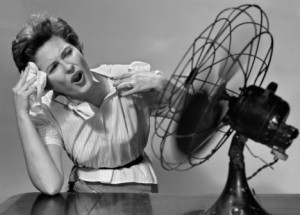
 From mood swings and hot flushes to insomnia and weight gain, the menopause can be a difficult time for any woman. In fact, sometimes it can be just downright embarrassing! If you’ve had enough of asking ‘is it me, or is it hot in here?’ whilst dabbing sweat off your brow then perhaps it’s time to try a natural approach to managing the menopause. After all, the menopause is a natural process, so it should be treated naturally.
Many women consult their GP when reaching menopause and are commonly offered HRT (hormone replacement therapy), but some other medications used to treat the menopause include anti-seizure drugs and anti-depressants. For many women they feel anxious about taking medication but find their symptoms so debilitating they’re not sure what other options are available to them.
What is the menopause?
Pre-menopause This is the period in which women are preparing for the menopause. For most women, hormone production begins to slow down around their 30’s and for many women there are no symptoms. However, for others they may experience anxiety, dry skin, fatigue, bloating, headaches, heart palpitations, irritability, insomnia etc. All these symptoms may start a decade before menstruation ceases altogether
Menopause The menopause is the time ovulation and progesterone production ceases. For a time, oestrogens are still produced by the ovaries, the ovaries stop responding to FSH (follicle stimulating hormone) and LH (luteinizing hormone) and this causes the hormone signaling system to malfunction – the hypothalamus gland begins sending out more GnRh (gonadotropin releasing hormones), the over activity of the hypothalamus and pituitary gland signals start affecting parts of the brain causing hot flushes, mood swings, fatigue, feeling cold and an inability to deal with stress appropriately.
Symptoms of the menopause
- Hot flushes
- Vaginal dryness
- Water retention
- Fat and weight gain, especially on the hips, thighs and abdomen
- Insomnia
- Decreased libido
- Mood swings
- Headaches, fatigue
- Short-term memory loss, lack of concentration
- Dry, thin wrinkly skin
- Thinning scalp hair and some increase in facial hair
- Bone mineral lose (osteoporosis)
- Diffused body aches and pain
As well as HRT (hormone replacement therapy) a woman having a hysterectomy is also relatively common in an attempt to remove the symptoms.
What is HRT?
Hormone replacement therapy is a medication that contains female hormones to replace the ones the body no longer makes after menopause. This used to be a standard treatment for women with menopausal symptoms. Use of hormone therapy changed abruptly when a large clinical trial found that the treatment actually posed more health risks than benefits, particularly when given to older postmenopausal women. Some side effects of HRT include bloating, weight gain, vaginal spotting, irritability, depression, stroke, uterine cancer, gallbladder disease and heart attack.
If not a hysterectomy or HRT, then what?
Homeopathy is the safest treatment before, during, and after menopause because it stimulates the natural hormonal balance without the use of harmful medications. Listed below are some common remedies that may help with menopausal symptoms.
Selecting a remedy The important part of selecting the correct remedy is to ‘match’ the symptom picture of the remedy as closely to your own symptoms. Symptom pictures, or descriptions of symptoms take into account the condition of the whole person, not just one symptom. If two remedies seem to be very close and hard to decide between, pick the one that best matches your most annoying symptom. Ideally you should consult with a fully qualified homeopath for treatment as the selection of remedies is individualised and you may need something different to what is listed below.
Sepia: This remedy can be helpful if a woman’s periods are becoming late and scanty, but heavy and flooding at other times. Her pelvic organs can feel weak with a ‘bearing down’ sensation, and she may have a craving for chocolate, vinegar or sour foods. Women who need this remedy usually feel exhausted, with an irritable detachment regarding family members, and a loss of interest in daily tasks and sex. Exercise makes her feel better and improves her energy.
Calcarea carbonica: This remedy may be helpful for women with night sweats and hot flushing (despite a general chilliness), as well as weight gain during menopause. People who need this remedy are usually responsible and hard-working, yet somewhat slow at completing tasks and can be easily fatigued. Anxiety may be strong, and they are worse for overwork or stress. They often have stiff joints or cramps in the legs and feet, and cravings for eggs and/or sweets.
Lachesis: Intense hot flushes with red or purplish flushing on the face, palpitations, and feelings of pressure, congestion, and constriction may indicate a need for this remedy. Tight clothing around the neck and waist may feel intolerable. A woman needing Lachesis is often very talkative, with strong emotions (often including jealousy and suspicion).
Natrum muriaticum: A woman who needs this remedy may seem quite reserved, but has strong emotions that she keeps to herself. She often feels deep grief and may dwell on the loss of happy times from the past or brood about hurts and disappointments. During menopause, she can have irregular periods accompanied by backaches or migraines. A person who needs this remedy usually craves salt, and feels worse from being in the sun.
Herbal remedies
Black Cohosh (Cimicifuga racemosa): This is traditionally known as the menopause herb and is very popular. It’s helpful for reducing the severity of hot flushes, memory loss, depression, and mood swings and can improve the thickness and elasticity of vaginal tissues.
Agnus Cactus: This herb has a hormone regulating effect and is particularly useful in the peri-menopausal phase to help settle the hormone fluctuations. It is only useful if artificial hormones are not already being taken. It has been used in Germany widely where herbal medicines are often used alongside traditional medicines. It is also used for impaired ovarian function, period problems and PMS
As with any form of complementary medicine, it’s important to seek the right advice and consult with a professional practitioner.
If the menopause is getting you down then you might be interested in my Don’t Sweat It – Menopause Relief package. The package includes 4 homeopathic consultations over 4 months and phone/email support between appointments. Click here to find out more: https://www.clairezarb.com/dont-sweat-it/ or email me for more information.
Until next time, have a happy healthy week.
Claire Zarb LCPH
t: 07582 269569
e: claire@clairezarb.com
w: www.clairezarb.com
s: c.zarb

Claire thanks for this. My daughter Kathryn (Kirkpatrick) recommended that I read your article and it has been helpful. I was particularly interested in the fact that feeling cold can be a symptom of the menopause as this is something that I do suffer from. My periods have not stopped altogether yet so I guess that means I am still peri-menopausal – so far no night sweats or hot flushes (long may this last!!!???)
Anyway thanks again for an interesting overview of homeopathic remedies.
Janet
Hi Janet! Thanks for your comment, I’m so glad you found the blog of interest. I hope the menopause is an easy process for you, but should you need any help or further advice, please do get in contact. Many thanks. Claire
Very very useful and informative article.
Thanks Sayeed, I’m glad you enjoyed it.